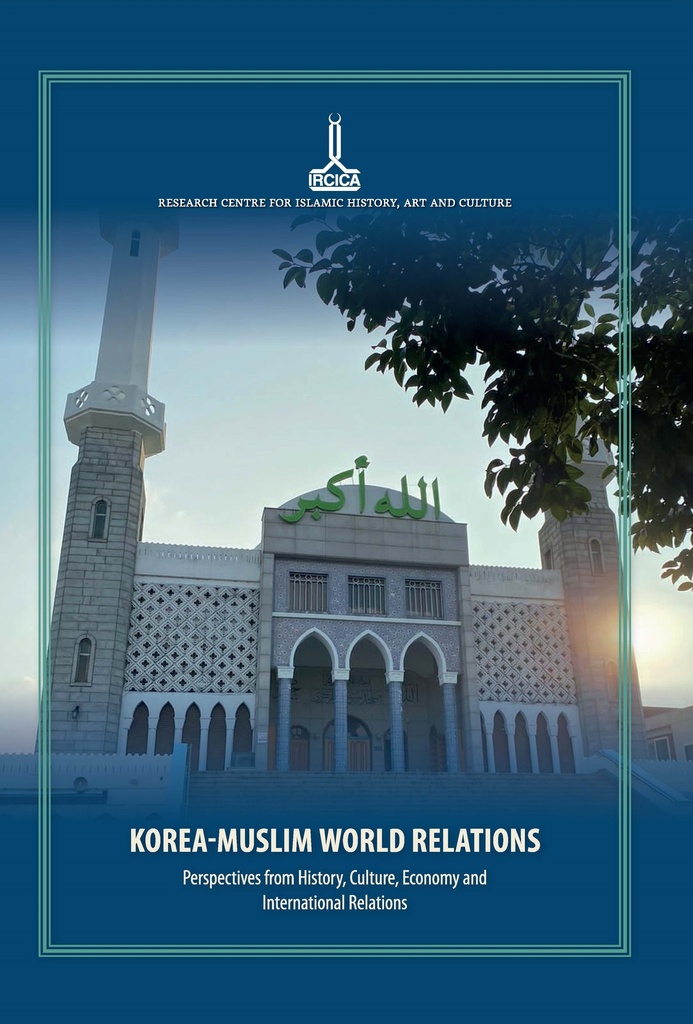
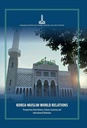
Korea-Muslim World Relations. Perspectives from History, Culture, Economy and International Relations
IRCICA, Istanbul, 2026
Preface: Ambassador, Prof. Dr. Mahmud Erol Kılıç
Editors: Sadık Ünay and Lee Hee Soo
ISBN 978-92-9063-494-2
This book gathers multidisciplinary perspectives on relations between Korea and the Muslim world, through sixteen articles drawn from two conferences which were co-organized by IRCICA in 2024 (Istanbul) and 2025 (Seoul). The articles address historical and/or contemporary aspects of relations in the fields of culture -- religion, arts, language, education; economy, trade, development policies; international relations, global and regional diplomacy. The first conference, themed “Korea and the Muslim World. Encounters with Diverse Cultures Along the Silk Road”, was co-organized by the Academia Via Serica of Keimyung University; Gyeongsang Municipality, Korea; Enstitü Sosyal, Istanbul; and IRCICA. The second conference, on “Multidimensional Perspectives on Korea-Muslim World Relations: History, Culture, Economy and International Relations”, was jointly coordinated by the Seoul National University Asia Center and IRCICA. These events gave a fruitful continuation to the series initiated by Hanyang University of Korea and IRCICA with the first conference held in 2018 (Istanbul). As was observed during that first event, although Korea and the Muslim world are culturally distinct and geographically distant from each other, they share comparable historical experiences and display similar social values and traditions. Research on the history and heritage of Korea-Muslim world relations has seen major advances with the gradual introduction of previously unknown original texts, including primary sources and documents written in Muslim peoples’ languages – Arabic, Turkish, Persian, and Urdu. The studies are advancing on the basis of ancient written and archeological sources from the Silk Road and works authored by geographers and travelers during the past centuries. Together with historical topics, the present book also features contemporary issues such as the global and regional trends impacting Korea’s relations with Muslim countries and the position and evolutions of Muslim communities in Korea.